




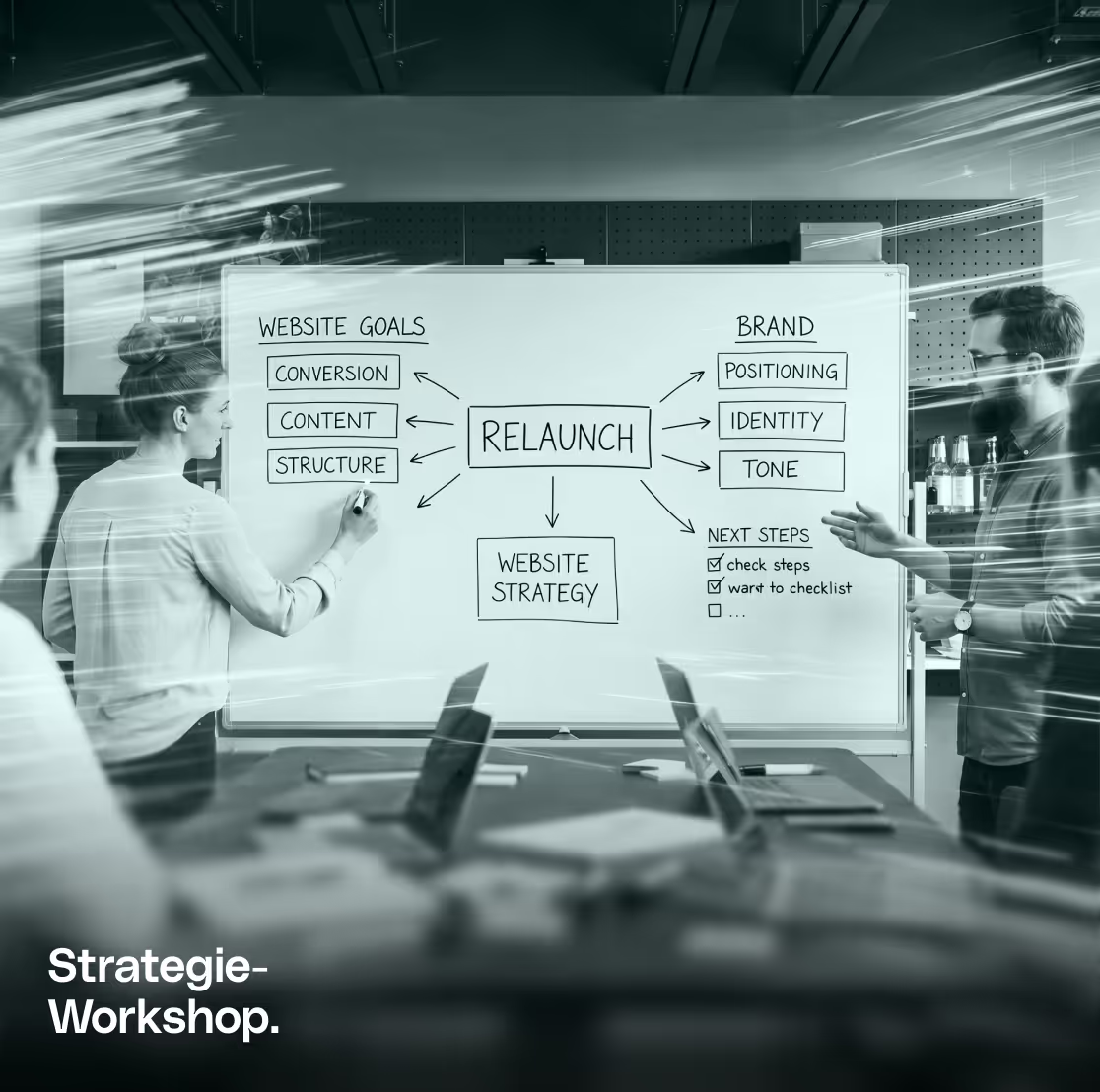
It all starts with a joint strategy workshop, digital or on-site in Munich. This is where we decide what the new website needs to deliver — and often how the brand will show up going forward. Because a relaunch is frequently the moment a company sharpens its identity.
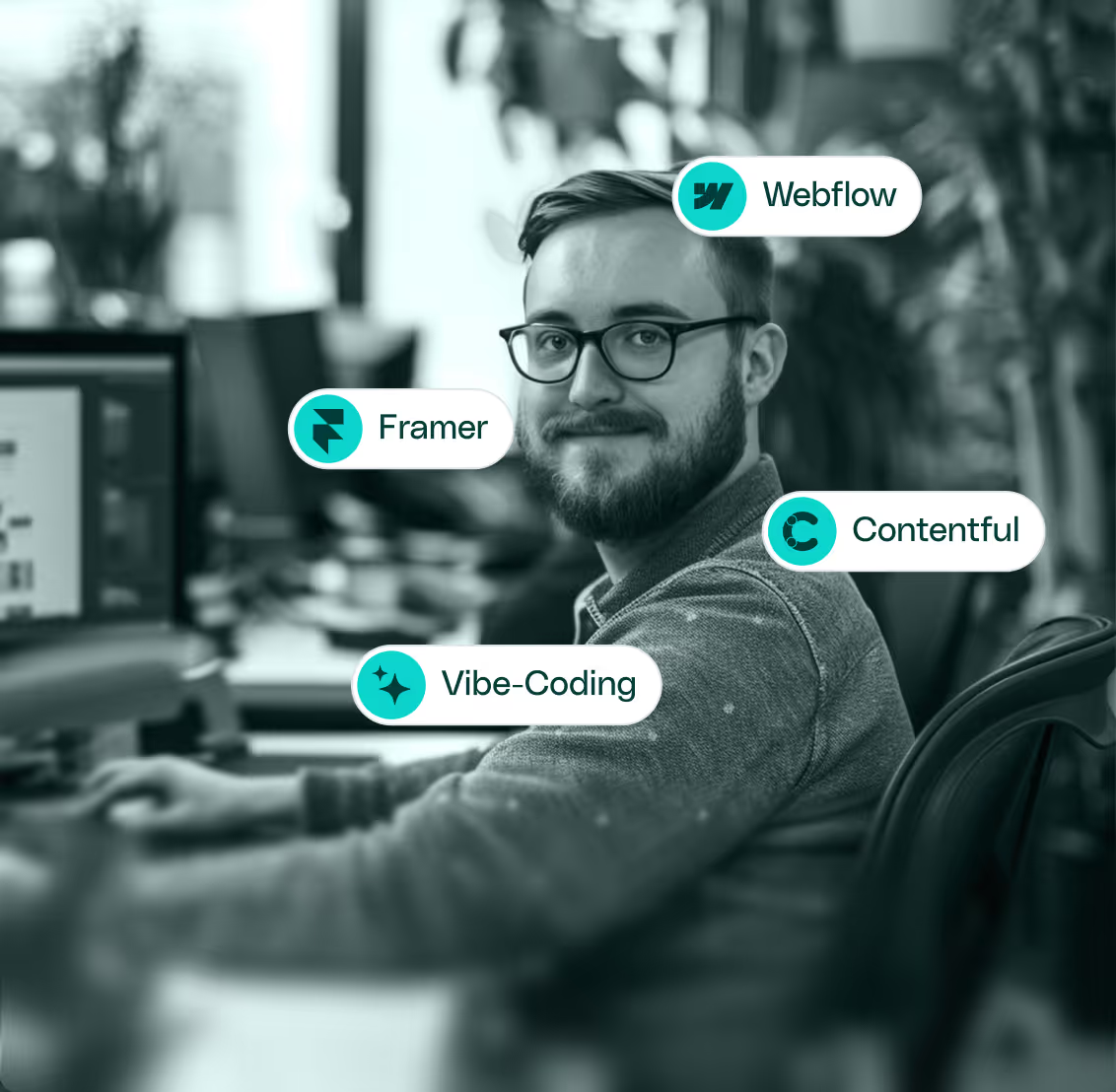
The right system depends on the project, not on preference. For the vast majority of B2B relaunches, Webflow is the clear favorite: modern, fast, secure, and easy for your internal team to maintain. An alternative is Framer. And where it fits, a headless setup with Sanity, increasingly built AI-assisted, that breaks free from the classic CMS corset.
Design agencies deliver looks, developers deliver code, strategists deliver a deck — and the result rarely comes together on its own. At Webnique, strategy, design, development, marketing, and content come from one tight-knit team. A relaunch works better when every discipline collaborates end to end, instead of being spread across multiple providers. And not from a large agency, but from an agile, highly personal team in Munich that holds the same standard from strategy through launch.













The price depends on scope. Small sites like a one-pager start in the low five figures, a focused B2B website with a clear structure in the mid five figures, and more complex platforms with ERP integration, multiple languages, or custom development sit above that. We run relaunches as fixed-price projects, so you can plan with clear numbers from the start. We define the scope together in the discovery call.
A typical B2B relaunch takes three to six months, depending on content volume, the number of stakeholders, language variants, and technical integrations. Faster timelines are possible, but they usually put quality in structure or migration at risk.
Only if the migration isn't properly planned. With a structured redirect concept, maintained content quality on top-ranking pages, and clean technical implementation, rankings can not only be preserved but usually improved. At Streifeneder, clicks increased by 66% and visibility by 266% four months after launch.
A redesign changes the look, while a relaunch alters strategy, structure, and technology. If your website's content is still relevant but visually outdated, a redesign with targeted conversion optimization is often sufficient. However, if your target audience, offering, or sales logic has changed, a relaunch is the more appropriate approach. We provide this assessment during a discovery call.
For the vast majority of B2B websites, we recommend Webflow: modern, fast, secure, and maintainable by your own team. Only for very large or highly complex requirements (extensive product catalogs with ERP integration, demanding multilingualism, custom backend logic) do we consider alternatives such as headless setups or traditional systems. We choose the CMS based on a requirements analysis, not personal preference.
A freelancer is often the right choice for clearly defined tasks within a specific area of expertise. However, a relaunch simultaneously affects strategy, UX, development, and SEO — and this is precisely where most mistakes occur if no one has an overall view. An agency is worthwhile when you need a team that covers all disciplines and takes responsibility for the overall outcome.
Every piece of content is assessed by performance, relevance, and SEO value. Strong content is migrated and sharpened, weak or outdated content is consolidated or removed. That's part of the strategy, not an afterthought.
We use AI across the entire process to speed up the work — from research and content to development. But the website isn't built by AI: our experts are involved at every step with their experience. AI speeds up the work, it doesn't replace solid craft.


