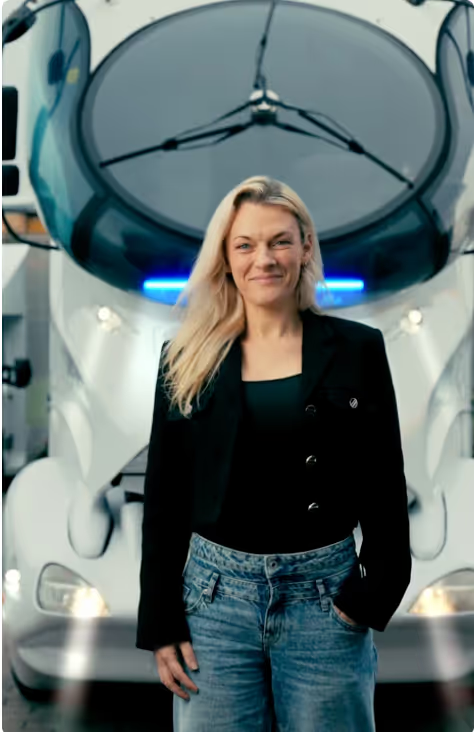


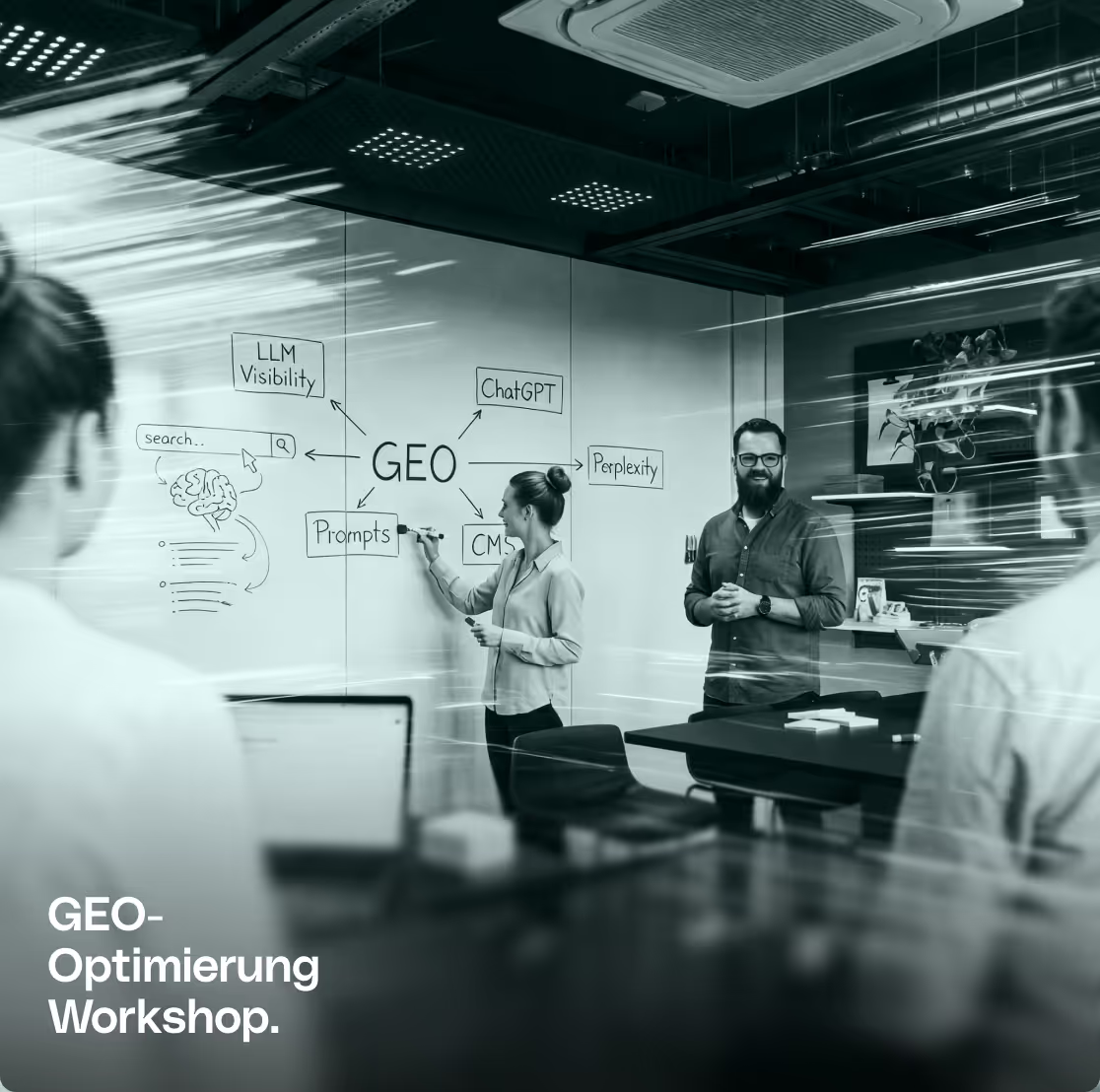
We offer customized GEO workshops for individuals and teams. Online or in-person, whichever suits you best. What makes us unique: we don't provide abstract training; instead, we work directly with your CMS. Whether it's Webflow, WordPress, or another system — your team learns how to independently build, structure, and maintain content for AI visibility.
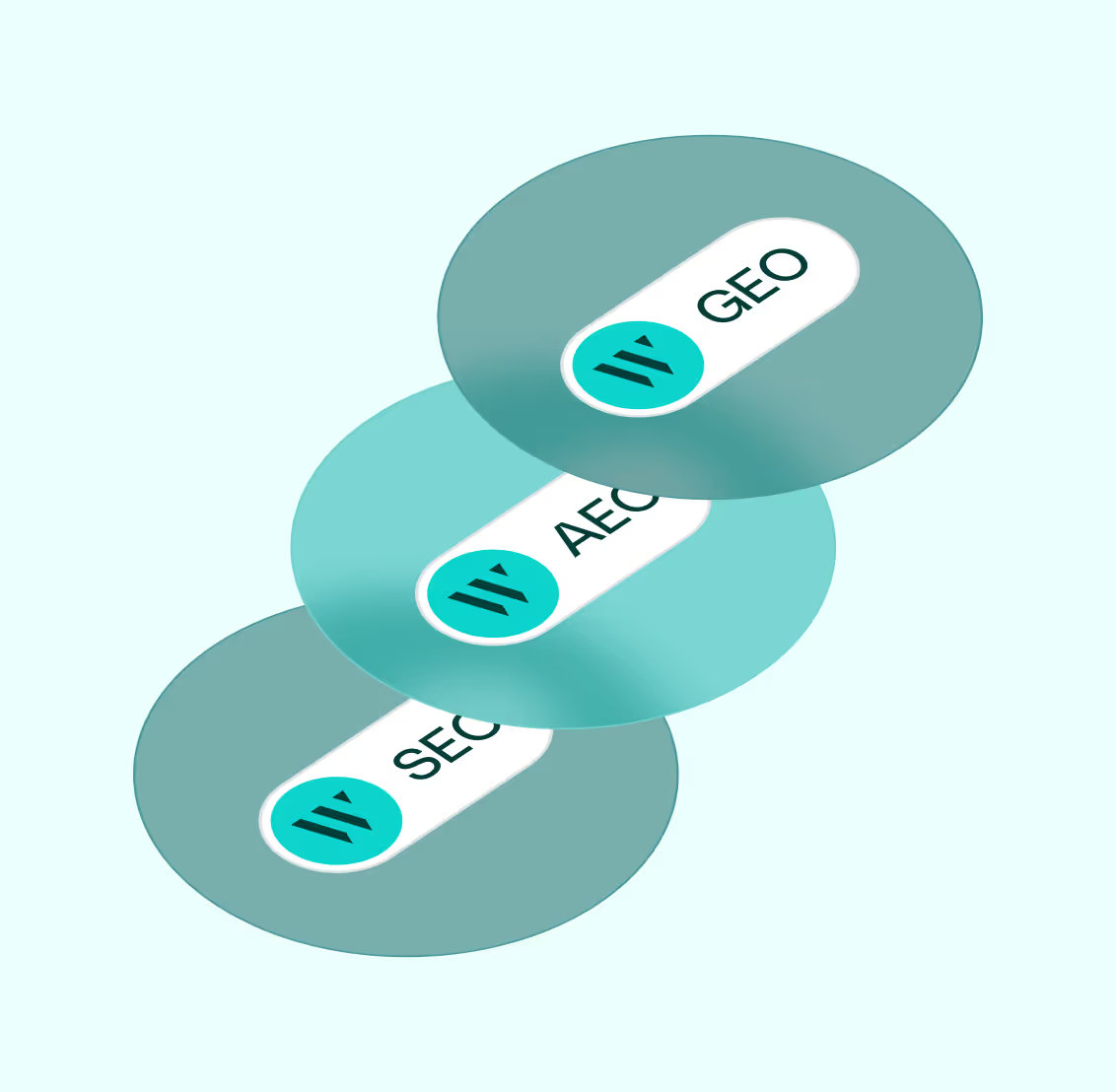
GEO is not an isolated field — and we don't treat it that way. What makes your website visible on Google often also makes it a valuable source for AI responses. We consider both together, rather than offering two separate disciplines. Our DNA as a relaunch agency further supports this: We know how content, structure, and technology work together because we build websites from the scratch. And we understand B2B.
Video calls, spontaneous chat messages, and ticket systems. As a digital agency, we love the straightforward communication channels the internet offers. But we also know the value of meeting in person. Especially for workshops and longer strategy meetings, getting together away from the screen is often the better choice. Our Munich office makes this possible — always ready to connect face-to-face when it counts.











A GEO agency (Generative Engine Optimization) optimizes your website and digital presence so that AI models like ChatGPT, Perplexity, Claude, or Gemini recognize, process, and cite your content as a source in their responses. Unlike traditional SEO, it's not about search engine rankings, but about visibility in the direct responses of generative AI systems.
The terms overlap significantly. GEO (Generative Engine Optimization) generally refers to optimization for generative AI search systems. AEO (Answer Engine Optimization) specifically focuses on ensuring your content is adopted as a direct answer. AI SEO is often used as an umbrella term. In practice, our methods are identical — the distinction is more academic.
Actually both. Approximately 70% of the measures that make your website visible to Google also help with AI search models. Those who consider both in isolation pay twice and lose their leverage. At our company, GEO and SEO operate as an integrated system.
We systematically track which prompts cause your brand to appear in ChatGPT and Gemini AI Overviews and AI Mode. This includes the context in which you are mentioned, how you are positioned against competitors, and what content is used as a source. The result is an AI equivalent to classic keyword ranking.
Initial movements in prompt tracking data often appear after 6 to 12 weeks. Stable visibility as a cited source builds up over 12 months — depending on the initial status, competitive environment, and content depth. AI models operate less linearly than Google, which is why successes tend to appear in bursts rather than incrementally.
llms.txt is a file in your website's root directory that allows you to give AI models direct instructions on which content they should prioritize processing. It's relatively new, not an official standard, but increasingly being considered by larger AI providers. We recommend it as a supplementary measure — not as a replacement for structured content and semantic HTML.
Currently, organic mentions in AI responses are the primary driver. While initial AI platforms are testing advertising formats, the market is still in its infancy. We focus on building organic visibility because it forms the foundation for any future advertising strategy — and because it's not dependent on an ad budget.
We offer either monthly retainers (cancellable monthly) or one-off project fees. The scope of work depends heavily on your current status, competition, and desired depth. During a discovery call, we'll jointly assess what level of effort is realistic to achieve your goals.
.avif)