
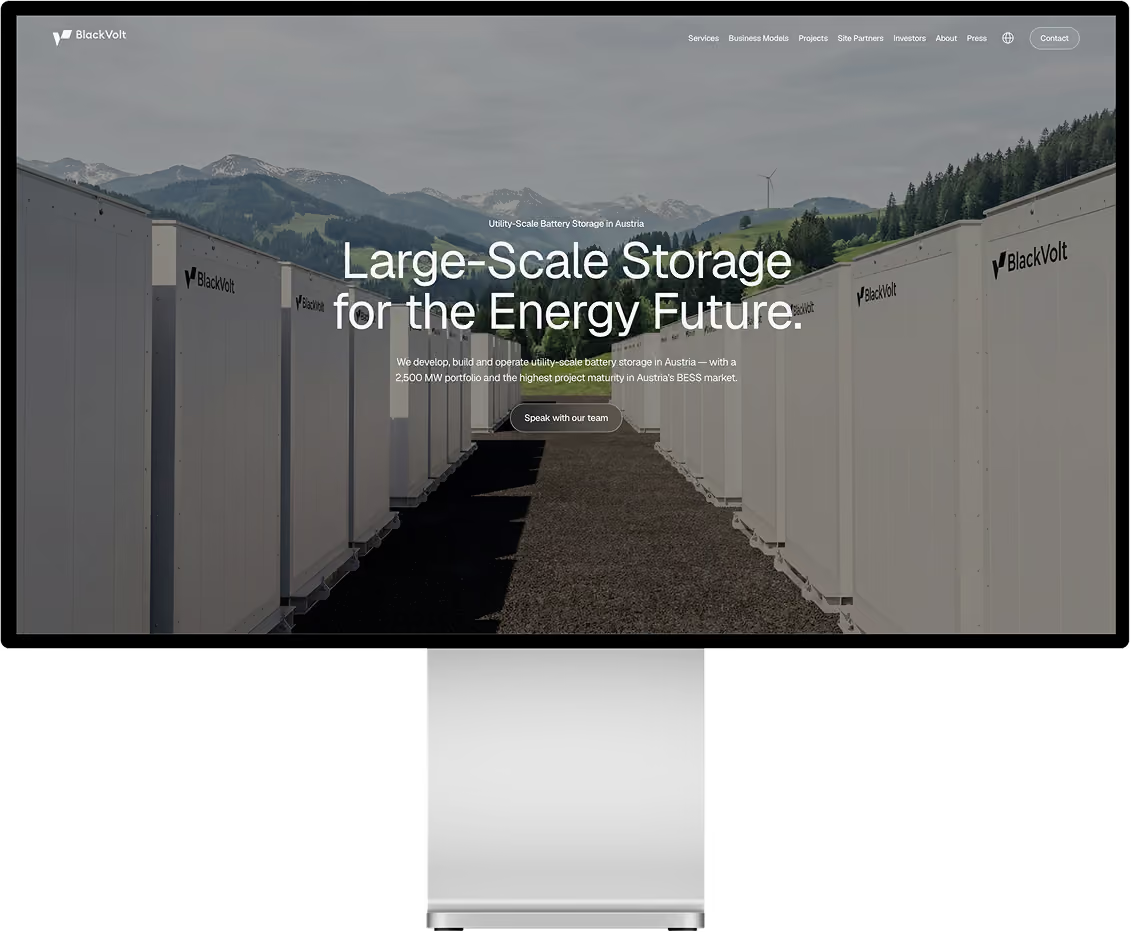
Investors are Blackvolt's most important audience. The existing website didn't answer the questions that actually come up in early investor conversations: Austrian regulatory standing, revenue stability, grid-connection readiness, bankability, scalability. Without solid answers, every first conversation stalled on the basics instead of moving toward due diligence.
Internally, there was no capacity for content, design, or development – the only input was a completed questionnaire. Hard constraints shaped every piece of content: return figures, financing structures, partner and investor names, and the general contractor on one project couldn't be named publicly. Usable image material didn't exist, the regulatory framework had to be Austrian rather than German, and the English version was tied to an active capital raise with a fixed, non-negotiable deadline.
Webnique took the project on end to end: strategy, keyword research, all copy, design, and development, from a single team. The only input from Blackvolt was a completed questionnaire and feedback on two milestones – no further coordination was needed on the client side.
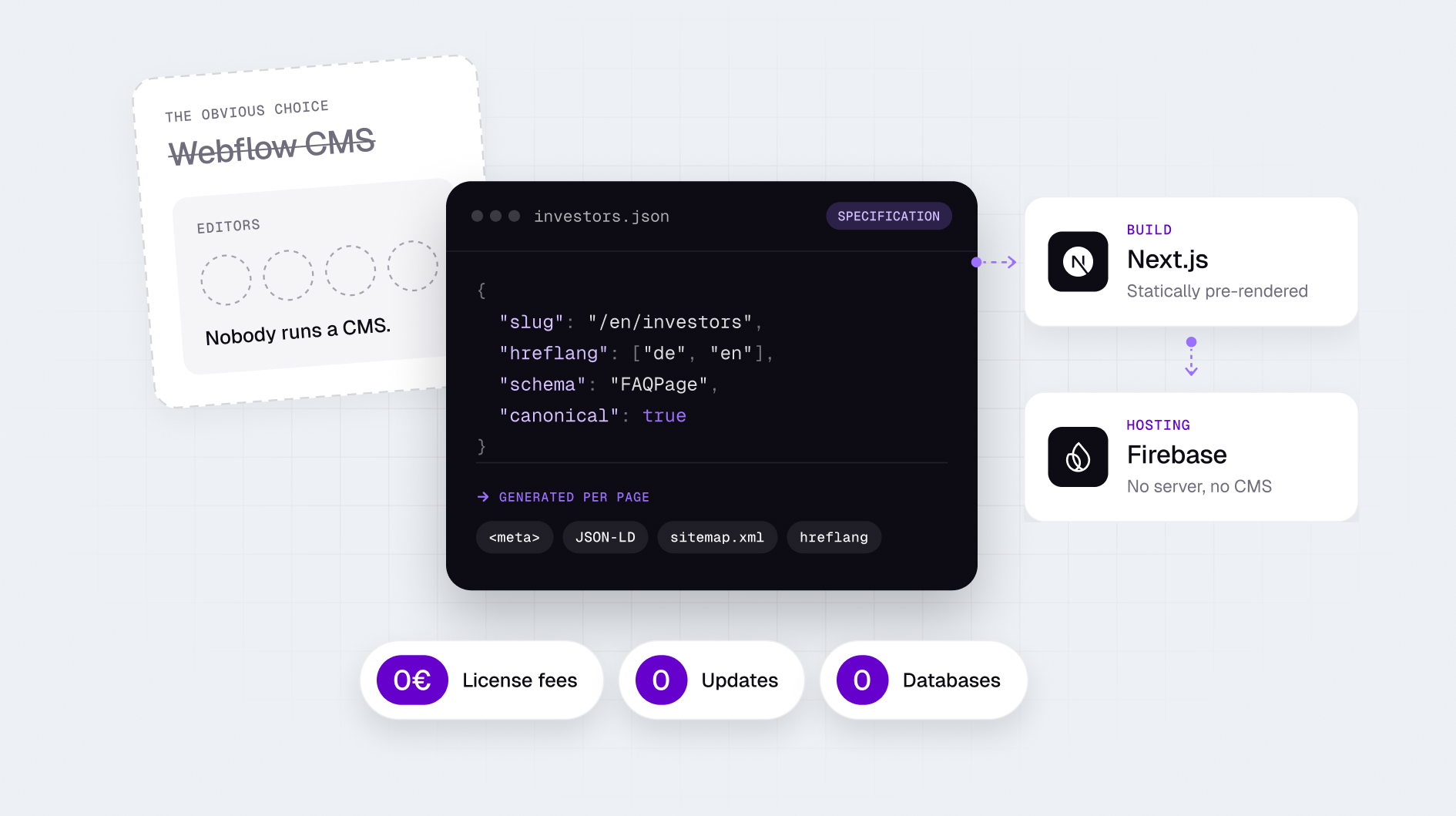
The technical decision went against a CMS: a static Next.js build on Firebase Hosting suited a team without editors better – fast load times, no attack surface in daily operation, no maintenance for content nobody manages editorially.
Client input came down to a questionnaire with eleven topic blocks: target audiences, positioning, project pipeline, regulatory environment, communication constraints.
From that, Webnique built the site architecture, keyword strategy, and seven German plus eleven English content pages, each answering a recurring question from early investor conversations. No workshop loops, no paragraph-by-paragraph sign-off.
Blackvolt went through two feedback rounds. Time spent on the client side came to a few hours.

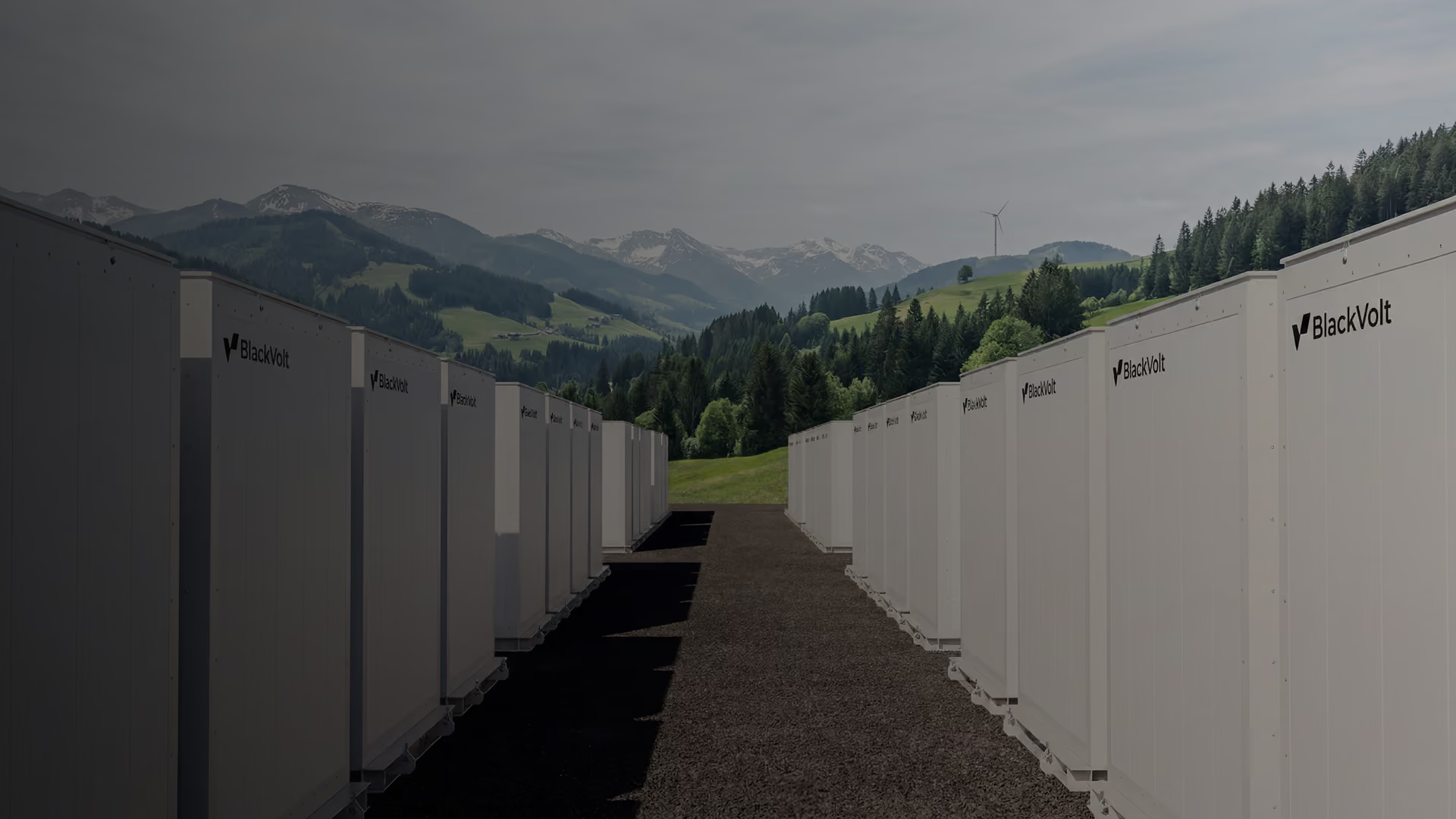
One site under construction, the other not yet broken ground, no usable facility photos. Stock photography would have undermined credibility with investors checking real projects.
Webnique presented four design directions in Figma side by side, one deliberately built not to work. The client didn't have to describe what they wanted, only choose. Direction 03, "Blueprint," won: white, black, one functional accent color, no green.
The imagery was generated rather than licensed, producing visuals that matched the plant technology and the chosen design language instead of interchangeable stock motifs from unrelated projects.

Webflow would have been the obvious choice. Webnique decided against it because Blackvolt has no editors.
Instead: a static Next.js build on Firebase Hosting. Content existed as a machine-readable spec that development could build from directly, including meta data and JSON-LD per page. Ten schema types, sitemap, hreflang, canonicals.
The result is a website with no operating overhead for Blackvolt: no license, no updates, no database as an attack surface.
The English version launched one week after the German site. The deadline wasn't negotiable: Blackvolt was going to market with an investor teaser, and most of the investors it was targeting speak English.
Keyword research in the US database showed that geographically qualified terms had no search volume there. So the investment shifted: structured data and a bilingual llms.txt for citability in AI search systems.
Eleven English pages including legal text, not a translation but an independent version based on the live German site.
Relevant for companies that need a complete website but lack internal resources for content and design – technically driven mid-market companies and project developers with small teams, where marketing isn't a dedicated function.


